Colonial Bungalows in Sri Lanka: What Makes Them Different?
Drive through Sri Lanka’s central highlands and the landscape begins to change. Tea covers the hillsides, temperatures become cooler and old estate roads disappear between plantations.
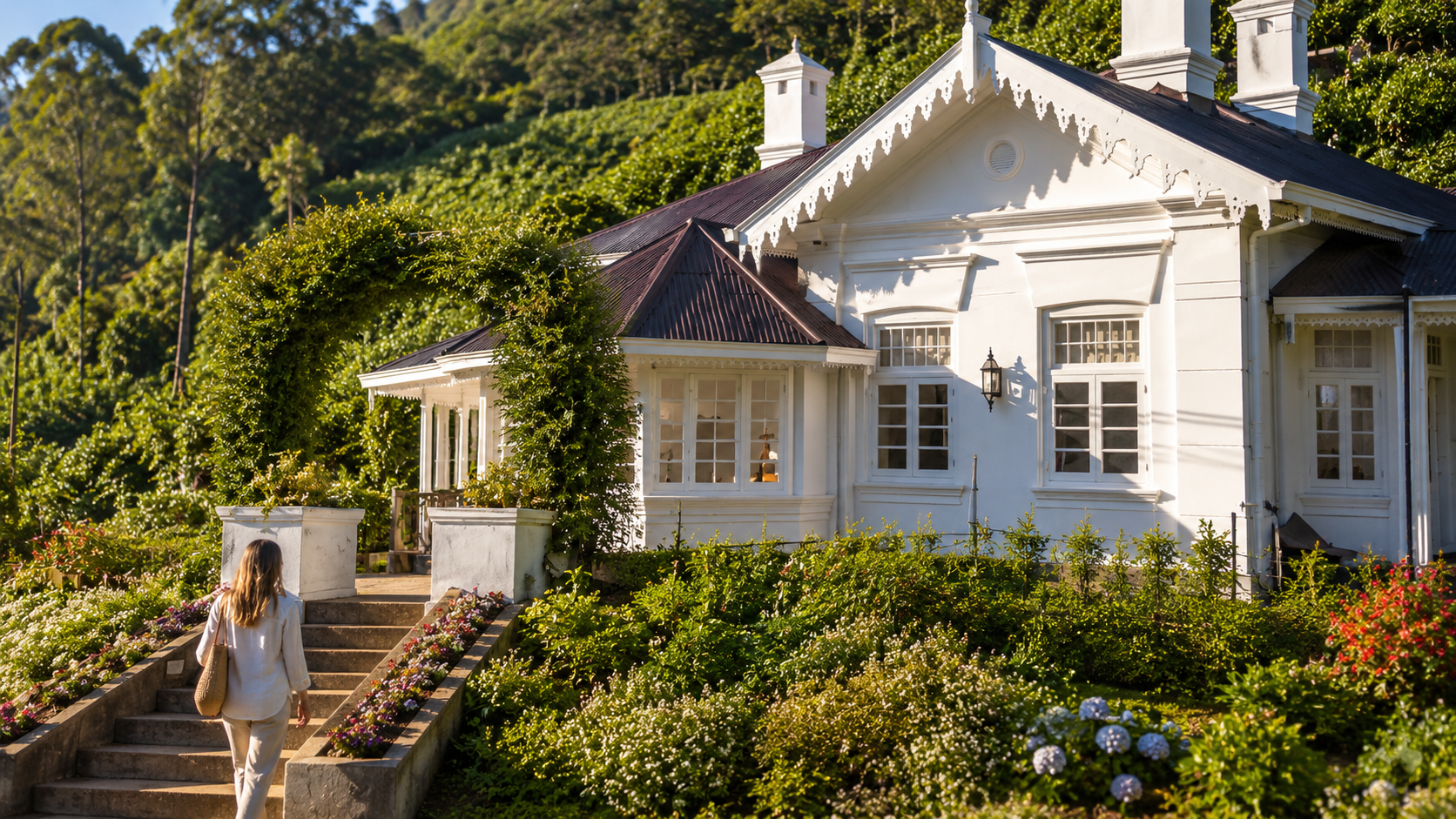
Many colonial bungalows in Sri Lanka were originally built as residences for estate managers during the colonial plantation era. Today, some have been restored as boutique accommodation, giving travellers a chance to experience a very different style of stay from a conventional hotel.
Where Did Sri Lanka’s Plantation Bungalows Come From?
The story is closely connected to the development of the plantation economy.
Coffee expanded significantly under British rule during the 19th century. When coffee leaf disease devastated much of the industry, tea increasingly replaced it. Commercial tea cultivation expanded rapidly during the late 19th century, transforming large areas of Sri Lanka’s central highlands.
Plantation estates needed managers, and those managers needed residences.
Why Were Bungalows Built Above the Tea Fields?
Location was an important part of plantation bungalow design.
Manager’s bungalows were frequently positioned on elevated ground. From these locations, estate managers could overlook sections of the plantation while also benefiting from expansive views.
That positioning created one of the characteristics still associated with tea-country bungalow stays today: a house surrounded by gardens with hills, valleys and plantations stretching beyond it.
What Makes Their Architecture Different?
There is no single design shared by every colonial bungalow.
Age, location, available materials, estate wealth and later renovations all influenced how individual buildings looked. However, several characteristics became associated with plantation bungalow architecture.
Wide Verandas
Verandas created a sheltered transition between indoors and outdoors.
They offered protection from rain and direct sunlight while also creating a place to sit overlooking gardens and plantations.
High Ceilings and Large Rooms
Many larger plantation bungalows were built with generous internal spaces.
High ceilings, large windows and substantial rooms helped create the spacious character that distinguishes them from many modern hotel buildings.
Pitched Roofs
Steep or pitched roofs were practical in regions experiencing heavy rainfall. They also became an important part of the visual character of hill-country bungalows.
Fireplaces
Sri Lanka may be tropical, but its highlands can become surprisingly cool.
In tea-growing areas at higher elevations, fireplaces became a characteristic feature of some estate bungalows. They reflected both the cooler climate and British domestic traditions.
Gardens
The bungalow was often surrounded by its own landscaped grounds.
Lawns, ornamental plants and mature trees created separation between the manager’s residence and the working areas of the plantation. Some surviving properties still retain this relationship between house, garden and tea estate.
Were They Simply British Houses Built in Sri Lanka?
Not exactly.
The bungalow itself has a much more complicated South Asian architectural history, and buildings constructed during British rule were adapted to different climates and settings.
In Sri Lanka’s plantation districts, British architectural preferences met local conditions, materials and building knowledge.
What Was Life Around These Bungalows Really Like?
The romantic appearance of an old bungalow should not erase the history of the plantation surrounding it.
Sri Lanka’s tea landscape was created through a colonial plantation system that relied heavily on labour brought from South India. Estates were socially and spatially hierarchical, with the manager’s bungalow occupying a very different position from workers’ housing.
The bungalow therefore represented more than an architectural style. It was also part of the management structure of the plantation.
Where Can You Find Colonial Bungalows in Sri Lanka?
Areas around Nuwara Eliya, Hatton, Haputale, Bandarawela and other tea-growing regions contain surviving examples of estate architecture.
The wider hill-country experience is also part of the attraction. Travellers can explore Sri Lanka’s tea country to understand how tea estates, mountains and accommodation come together across the region.
Not every building marketed as “colonial” is necessarily an original colonial-era bungalow, however. Some properties are newer buildings inspired by historic architecture, while others are genuine former estate residences that have been restored or adapted.
Are All Colonial Bungalows Luxury Hotels?
No.
Colonial bungalows in Sri Lanka describe a historical and architectural connection rather than a specific level of luxury.
Some restored properties have become high-end boutique retreats. Others remain private residences, estate buildings or more modest accommodation.
Renovation also varies considerably. One property may preserve much of its original layout and character, while another may combine an older exterior with extensively modernised interiors.
Conclusion
Colonial bungalows in Sri Lanka are different because they are closely connected to the history, geography and plantation culture of the island’s highlands.
Today, restored plantation bungalows can offer travellers something beyond a conventional hotel stay. They provide an opportunity to experience a historic building within the landscape that shaped it.
But their appeal becomes more meaningful when the full story is understood. Behind the fireplaces, gardens and tea-covered views is the complex history of Sri Lanka’s plantation economy and the communities whose labour helped create it.